A Hungry Person’s Guide to Chinese Food Near Chinatown, NYC
Where every block tells a story and every dish is a reason to come back
You smell it before you see it. Step off the Canal Street subway and the air shifts — roast duck glaze and five-spice, a faint sweetness of egg custard tarts drifting from a bakery window, and something undeniably savory coming from a wok somewhere just out of sight. This is New York’s Chinatown, and it is still, after all these years, one of the most electric places in America to eat.
New York’s Chinatown is no theme park version of Chinese culture. It is one of the oldest, densest, and most authentic Chinese communities in the Western world — a neighborhood where grandmothers haggle over bok choy at sidewalk stalls, where roast ducks hang lacquered and gleaming in restaurant windows, and where the lunch crowd at a good noodle shop will include everyone from Fujianese construction workers to Michelin-starred chefs on a day off. If you want to understand what Chinese food in America can really be, this is the place to start.
The Streets Themselves Are the Menu
The heart of it all is Mott Street — narrow, slightly chaotic, and completely wonderful. Walk it slowly. Peer into steamy restaurant windows. Let yourself get distracted by the BBQ pork hanging at a roast meat counter, or the elderly man nursing a bowl of congee at a folding table on the sidewalk. Then fan out: down to Canal Street for produce vendors and seafood tanks, east along East Broadway where the Fujianese community has staked its delicious claim, and around the bend of Doyers Street — that peculiar little elbow of a road that locals call the “bloody angle” for its colorful history, but which today is more likely to draw you in for a plate of dumplings.
What makes this neighborhood singular isn’t just the density of restaurants — it’s the variety within a variety. Chinese cuisine is not a monolith; it’s a continent’s worth of regional traditions, and Chinatown reflects that. On a single block, you can move from delicate Cantonese steamed fish to fiercely spiced Sichuan cold noodles, from Hong Kong-style milk tea and pineapple buns to hand-pulled Lanzhou beef noodle soup. There is nowhere else in America where this compression of Chinese culinary tradition exists in such raw, unpretentious, glorious form.
There is nowhere else in America where this compression of Chinese culinary tradition exists in such raw, unpretentious, glorious form — where eating authentically doesn’t require an expense account, just a willingness to wander.
The Dim Sum Ritual
If you’ve never done dim sum properly in Chinatown, carve out a Saturday or Sunday morning and make your way to a table before 11 AM. The experience is unlike anything else: carts rolling between tables laden with bamboo steamers, the gentle percussion of tea poured and plates clattered, elders ordering by pointing and nodding, children reaching past grown-ups for the sesame balls. It is communal eating at its most joyful.
Golden Unicorn on East Broadway remains a grand, old-school choice — three floors of Cantonese ceremony with carts still doing the rounds, just as it should be. Down on Mott Street, Ping’s serves everything from pristine har gow to XO-sauce oysters and a legendary secret menu for those in the know. And then there’s Nom Wah Tea Parlor on Doyers Street, NYC’s oldest dim sum parlor (since 1920), where the room smells of sesame oil and decades of good living. The spring rolls alone are worth the trip.
What to order? Start here:
Steamed shrimp dumplings in gossamer-thin rice-flour wrappers. The benchmark of any dim sum kitchen.
Open-faced pork and shrimp dumplings, often topped with a jewel of bright orange roe.
Silken rice noodle rolls stuffed with shrimp or BBQ pork, doused in sweet soy sauce.
Fried glutinous rice balls coated in sesame seeds, filled with lotus paste. Crispy, chewy, perfect.
Flaky pastry shells cradling silky, barely-sweet egg custard. Ideally eaten warm.
Pan-fried daikon radish cake, crispy outside and tender within. An underrated gem.
The Sichuan Heat Wave
Not everything here is Cantonese. In recent years, the neighborhood around Chinatown — spilling east onto Essex Street and north up Bowery — has become a serious destination for Sichuan food, and the options range from good to genuinely extraordinary.
Fan Szechuan on Essex Street has been winning devotees with its Chili Oil Braised Fish, its impeccable Peking duck, and a mala hot pot that produces the particular numbing-tingly euphoria that Sichuan peppercorns alone can deliver. On Bowery, Jiang Nan NYC earns its Michelin recognition with dish after refined dish — the duck is a revelation, and the service is warm in a way that doesn’t feel common in this neighborhood. These are places that can hold their own against any Chinese restaurant in the country.
Sichuan food is an adventure in contrast: the gentle bass note of fermented black beans, the bright acid of rice vinegar, the floral-numbing punch of Sichuan peppercorns. Cold sesame noodles, twice-cooked pork, mapo tofu bubbling in its pool of chili oil — each dish a little lesson in why one of the world’s great cuisines can’t be reduced to a single flavor profile.
A Gem Worth Seeking Out: Wa Lung Kitchen
Wa Lung Kitchen
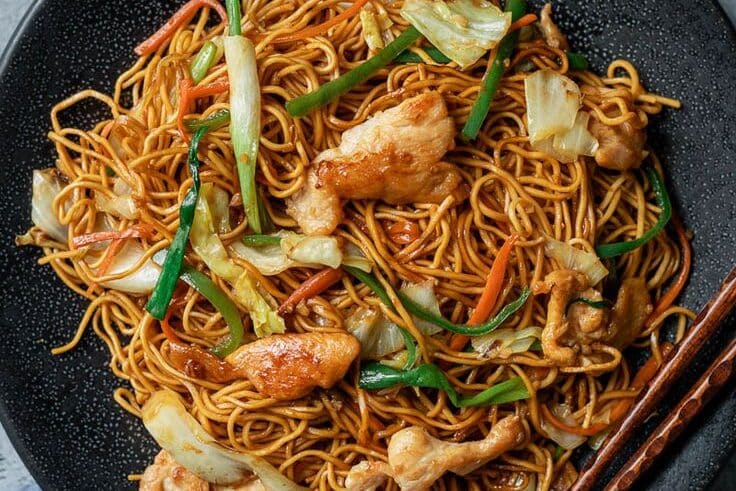
Tucked away on Grand Street at the edge of the neighborhood, Wa Lung Kitchen is the kind of no-frills Chinese restaurant that Chinatown regulars quietly love — the kind of place that keeps a neighborhood honest. The crispy chicken wings are a crowd favorite (and deserve to be): golden and crackling outside, juicy within, arriving with a mound of well-seasoned fried rice that makes the whole plate feel like an act of generosity. The crab rangoon has a devoted following for good reason.
This is home-style Chinese-American cooking done with care — approachable, satisfying, and priced like a neighborhood joint should be. It’s a great spot to duck in between bouts of wandering the area, or to order from when you want something reliably delicious without the fuss. If you’re eating your way through this part of Manhattan, Wa Lung deserves a spot on your itinerary.
Visit Wa Lung Kitchen →Beyond the Classics: What Else to Explore
Chinatown’s food scene keeps expanding outward. The stretch along Bowery and the Lower East Side is increasingly home to modern Chinese kitchens — restaurants that draw on tradition but aren’t bound by it, pairing craft cocktails with cumin lamb skewers, or serving Shanghainese soup dumplings alongside a natural wine list. It’s a neighborhood in conversation with itself, the old and new jostling for space in the best possible way.
Don’t overlook the bakeries. A Hong Kong-style café — with its laminated menus, fluorescent lights, and extraordinary milk tea — is as essential a Chinatown experience as any sit-down restaurant. Order a hot milk tea, a pineapple bun slicked with butter, and a plate of French toast (yes, Hong Kong-style French toast, fried and drizzled with sweetened condensed milk). Eat it slowly. Look out at the street. Feel extremely lucky to be here.
A Few More Stops Worth Your Time
NYC’s oldest dim sum parlor, operating since 1920. The spring rolls and sesame balls are legendary. Cash and Amex only — come prepared. Open daily 11am–9pm.
Grand banquet-hall dim sum with traditional push carts still doing the rounds. Come early on weekends; it fills up fast and loudly, as it should.
Reliably excellent dim sum open until 3am — a miracle in a city that supposedly never sleeps but rarely feeds you after midnight.
Chili Oil Braised Fish, Peking duck, and a jaw-dropping mala pot. Rated 4.8 stars and earns every one. One of the best Sichuan kitchens in the city.
Michelin-recognized, beautifully executed Chinese cooking with exceptional service. The beef brisket and the duck are destinations in themselves.
A Chinatown classic for Cantonese seafood and all-day dim sum. Ask about the secret menu — the XO-sauce oysters and salted baked chicken are worth any extra conversation.
Here is the truth about eating in New York’s Chinatown: the best meals are rarely the ones you planned. They’re the congee you ducked into to escape the rain, the soup dumpling place a stranger pointed you toward, the late-night pork chop rice that cost nine dollars and tasted like it was cooked specifically for you. Come with an appetite, a willingness to wander, and no fixed agenda. The neighborhood will take care of the rest.