Language Martyrs’ Day in the Lower East Side: A Celebration of Linguistic Resistance and Cultural Identity
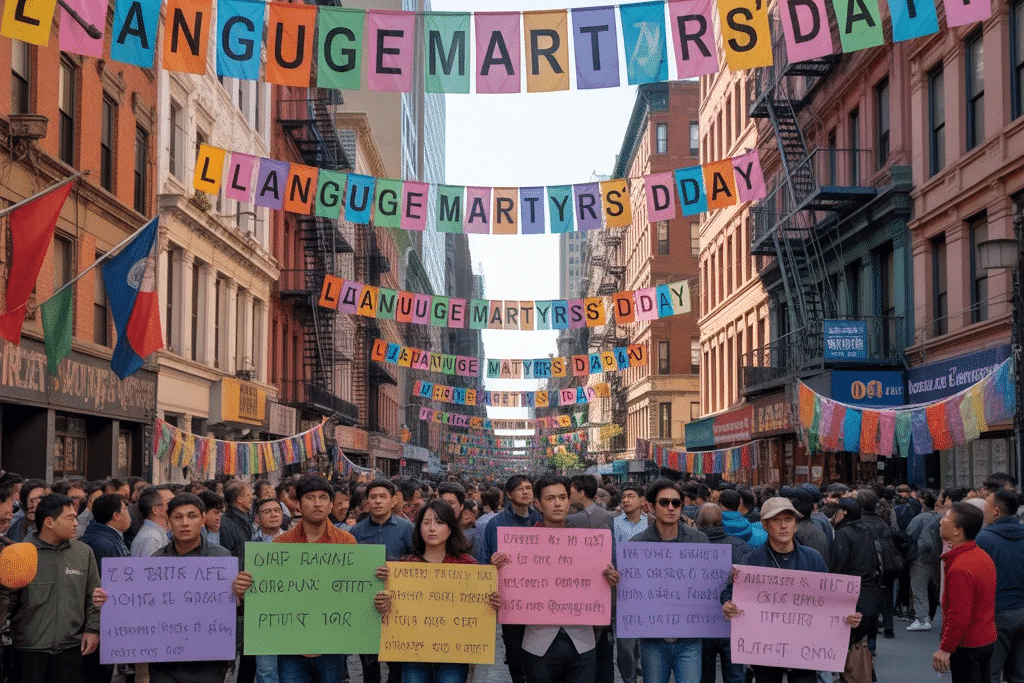
The Lower East Side of Manhattan stands as one of America’s most storied neighborhoods—a place where generations of immigrants have arrived with little more than their languages, their dreams, and their determination to build new lives while maintaining their cultural heritage. It is fitting, then, that this historic neighborhood serves as a powerful backdrop for understanding Language Martyrs’ Day, an observance that celebrates linguistic identity, cultural resistance, and the fundamental human right to speak, learn, and preserve one’s native language.
Understanding Language Martyrs’ Day
Language Martyrs’ Day, observed annually on February 21st, commemorates a pivotal moment in global history: the Bengali Language Movement of 1952 in East Pakistan, now Bangladesh. On this date, students took to the streets of Dhaka to protest the Pakistani government’s attempt to impose Urdu as the sole official language, effectively marginalizing Bengali, the mother tongue of the majority population. The protests turned tragic when police opened fire on demonstrators, killing several students who became known as language martyrs. Their sacrifice was not in vain; it sparked a movement that ultimately secured Bengali’s recognition as an official language and inspired similar linguistic rights movements worldwide.
The United Nations recognized February 21st as International Mother Language Day in 1999, transforming a regional tragedy into a global celebration of linguistic diversity and the rights of people to use, preserve, and develop their native languages. Today, the day resonates far beyond Bangladesh, speaking to communities everywhere who have fought to maintain their languages against forces of assimilation, colonialism, and cultural erasure.
The Lower East Side: A Neighborhood of Languages
To understand why Language Martyrs’ Day holds particular significance in the Lower East Side, one must first appreciate the neighborhood’s extraordinary linguistic and cultural history. The Lower East Side has never been a monolingual space; rather, it has been a dynamic, ever-evolving tapestry of languages, accents, and cultural expressions.
In the late 19th and early 20th centuries, the Lower East Side was predominantly home to German and Jewish immigrants. Yiddish, a Germanic language infused with Hebrew and Slavic elements, became the lingua franca of the neighborhood. Yiddish theaters, newspapers, schools, and cultural institutions flourished along streets like Orchard and Delancey. The neighborhood was so thoroughly Jewish that it was sometimes called the “Jewish Quarter,” and Yiddish was as common on the streets as English.
Following the restrictive immigration policies of the 1920s, the demographic composition of the Lower East Side shifted. Italian immigrants, who had initially settled in other parts of the neighborhood, became increasingly dominant. Italian language and culture permeated the community, with Italian restaurants, social clubs, and newspapers becoming central to neighborhood life. Italian remained a living language in homes and businesses well into the latter half of the 20th century.
By the mid-20th century, Puerto Rican and Dominican immigrants began arriving in significant numbers, transforming the Lower East Side once again. Spanish became the predominant language, and the neighborhood became a center of Latino culture and activism. The Puerto Rican Young Lords, a radical activist organization of the 1960s and 1970s, organized from the Lower East Side and fought for community control, educational equity, and cultural recognition. Spanish language schools, cultural centers, and media outlets became vital institutions.
Simultaneously, Chinese immigrants established communities in and around the Lower East Side, particularly in the adjacent Chinatown neighborhood. Cantonese and Mandarin Chinese became additional layers in the neighborhood’s linguistic landscape, with Chinese-language businesses, schools, and cultural organizations serving the community.
Today, the Lower East Side remains remarkably diverse. While gentrification has displaced many long-standing communities, the neighborhood still hosts speakers of Spanish, Chinese, Polish, Russian, Bengali, Arabic, and numerous other languages. It is this history of linguistic plurality that makes the Lower East Side an ideal place to celebrate and reflect upon Language Martyrs’ Day.
Language as Resistance: Historical Parallels
The struggle commemorated on Language Martyrs’ Day—the fight to preserve and promote one’s native language against forces seeking to suppress or marginalize it—finds powerful echoes in the Lower East Side’s history. Immigrant communities in the neighborhood have consistently faced pressure to abandon their native languages in favor of English, a process known as linguistic assimilation.
During the early 20th century, Yiddish-speaking Jewish immigrants faced considerable discrimination and pressure to “Americanize.” Despite this, they built a thriving Yiddish cultural infrastructure that sustained the language for generations. Yiddish schools taught children to read and write in their mother tongue; Yiddish theaters presented plays and musicals; Yiddish newspapers reported on community news and world events. This was not merely cultural preservation; it was an act of resistance against the implicit message that their language and culture were inferior to Anglo-American norms.
Similarly, Puerto Rican and Dominican communities in the Lower East Side fought to maintain Spanish language and culture despite educational systems that prioritized English and often denigrated Spanish as a “foreign” language. The establishment of bilingual education programs in the 1970s, for which Lower East Side activists fought vigorously, represented a victory in the struggle for linguistic rights. These programs acknowledged that children could learn more effectively when their native language was respected and utilized in educational settings.
The parallel between these historical struggles and the Bengali Language Movement is striking. In each case, marginalized communities asserted their fundamental right to use, preserve, and transmit their native languages. In each case, language became a vehicle for asserting dignity, identity, and cultural autonomy in the face of forces—whether governmental, institutional, or social—that sought to diminish or erase linguistic difference.
Contemporary Significance: Language and Gentrification
While the historical parallels are important, Language Martyrs’ Day also speaks to contemporary challenges facing the Lower East Side. In recent decades, gentrification has fundamentally altered the neighborhood’s character. Long-standing immigrant communities have been displaced by rising rents and property values. Storefronts that once displayed signs in Yiddish, Spanish, or Chinese now advertise luxury condominiums and high-end boutiques.
This displacement has profound linguistic consequences. When communities are scattered and dispersed, the transmission of native languages to younger generations becomes more difficult. Children who might have grown up surrounded by Spanish or Cantonese in a cohesive neighborhood now find themselves isolated from their linguistic communities. Schools that once offered bilingual education now emphasize English-only instruction. Institutions that once served as centers for linguistic and cultural preservation have closed or relocated.
Language Martyrs’ Day, in this context, becomes a call to action. It reminds us that language is not merely a tool for communication; it is a repository of cultural knowledge, historical memory, and community identity. The loss of languages represents a loss of cultural diversity and the erasure of particular ways of understanding and engaging with the world.
Celebrating Language Martyrs’ Day on the Lower East Side
In recent years, communities on the Lower East Side have begun to actively celebrate Language Martyrs’ Day, organizing events that honor linguistic diversity and commemorate the struggle for language rights. These celebrations often take multiple forms.
Community organizations host cultural events featuring music, poetry, and performances in various languages. These events create spaces where people can celebrate their linguistic heritage and connect with others who share similar experiences of linguistic marginalization or cultural displacement. Local libraries and cultural centers organize multilingual storytelling sessions, where elders share tales in their native languages while younger generations listen and learn.
Educational institutions in the neighborhood use Language Martyrs’ Day as an opportunity to teach students about linguistic diversity and the importance of preserving endangered languages. Schools organize workshops where students learn basic phrases in languages spoken by their classmates’ families, fostering cross-cultural understanding and respect. These initiatives help young people appreciate the linguistic richness of their neighborhood and understand that multilingualism is an asset, not a deficit.
Artists and activists also use Language Martyrs’ Day to create public art installations that celebrate the neighborhood’s linguistic heritage. Murals featuring text in multiple languages adorn building walls, creating visual representations of the Lower East Side’s diversity. Street performances and spoken word events showcase the beauty and complexity of different languages, challenging the dominance of English in public spaces.
The Bengali Community and Language Martyrs’ Day
The Bengali community in New York City, including those residing in and around the Lower East Side, holds particular significance in the observance of Language Martyrs’ Day. Bengali immigrants have established a vibrant presence in the city, with communities concentrated in neighborhoods like Jackson Heights in Queens and parts of Brooklyn. However, the Lower East Side’s historical role as a point of entry for immigrants means that Bengali families have also passed through or settled in this neighborhood.
For the Bengali community, Language Martyrs’ Day is deeply personal. It commemorates the sacrifice of their ancestors and affirms the value of Bengali language and culture. Community members organize gatherings at which they pay homage to the martyrs, recite Bengali poetry, sing traditional songs, and discuss the ongoing importance of linguistic preservation. These events often feature the construction of Shaheed Minars—monuments to the language martyrs—using flowers, photographs, and other materials, creating temporary memorials that powerfully evoke the original monument in Dhaka.
The Bengali community’s observance of Language Martyrs’ Day also serves as an educational opportunity for other New Yorkers. Many people outside the Bengali community are unfamiliar with the history of the language movement, and public celebrations help raise awareness about this important chapter in the struggle for linguistic and cultural rights. Through these events, the specific history of the Bengali Language Movement becomes part of the broader narrative of immigrant resistance and cultural preservation that defines the Lower East Side.
Language Preservation Efforts and Community Organizations
Several organizations on the Lower East Side actively work to preserve and promote linguistic diversity year-round, making Language Martyrs’ Day a natural extension of their ongoing efforts. These organizations understand that language preservation requires consistent, sustained work, not just annual commemorations.
Community-based language schools offer classes in Spanish, Cantonese, Mandarin, and other languages spoken by neighborhood residents. These schools serve multiple purposes: they help immigrant parents transmit their native languages to children who may be more comfortable in English; they provide spaces for cultural connection and community building; and they challenge the assumption that linguistic assimilation is inevitable or necessary.
Cultural centers serve as hubs for linguistic and cultural activities. Organizations like the Museum at Eldridge Street, which preserves a historic synagogue and tells the story of Jewish immigration to the Lower East Side, include Yiddish language programs and cultural events. Latino cultural organizations offer Spanish-language programming and work to document the neighborhood’s Puerto Rican and Dominican heritage. These institutions recognize that language and culture are inextricably linked, and that preserving one requires preserving the other.
Advocacy organizations work on policy issues related to language rights. They fight for bilingual education, language access in government services, and protections against linguistic discrimination. They understand that celebrating linguistic diversity on Language Martyrs’ Day rings hollow without concrete efforts to protect language rights in everyday life. These organizations draw inspiration from the Bengali Language Movement, which showed that grassroots activism can successfully challenge policies that marginalize minority languages.
The Role of Technology in Language Preservation
In the 21st century, technology has become an increasingly important tool for language preservation on the Lower East Side. Digital platforms and social media allow community members to connect across geographic distances, maintaining linguistic communities even when physical neighborhoods are disrupted by gentrification.
Community members create YouTube channels featuring content in their native languages, from cooking shows to political commentary to children’s storytelling. These channels serve multiple audiences: immigrants seeking content in their home languages, younger generations learning their heritage languages, and anyone interested in the cultural perspectives these languages represent.
WhatsApp groups and Facebook communities organized around specific languages or cultural backgrounds create virtual spaces for linguistic practice and cultural exchange. These digital communities help sustain languages that might otherwise decline in the face of English dominance. They allow parents to connect their children with native speakers, facilitate language learning, and create networks of support for linguistic preservation.
Some community organizations have developed apps and online resources specifically designed to teach neighborhood languages. These technological tools make language learning more accessible, particularly for young people who are comfortable with digital platforms. They also help document languages and dialects that might otherwise be lost, creating digital archives of linguistic diversity.
However, technology alone cannot preserve languages. The most effective language preservation efforts combine digital tools with in-person community building, formal education, and cultural activities. Language Martyrs’ Day reminds us that language is fundamentally about human connection, and that preserving languages requires creating and maintaining communities where those languages can be spoken, celebrated, and transmitted to future generations.
Lessons for Contemporary Language Activism
The Bengali Language Movement and the history of linguistic resistance on the Lower East Side offer important lessons for contemporary language activism. First, they demonstrate that language rights are human rights. The ability to speak, learn, and preserve one’s native language is fundamental to human dignity and cultural identity. Efforts to suppress or marginalize minority languages, whether through explicit policies or implicit social pressure, represent a form of cultural violence.
Second, these histories show that grassroots activism can successfully challenge linguistic oppression. The Bengali language martyrs were students—young people who recognized injustice and were willing to take action despite the risks. Similarly, community activists on the Lower East Side have fought for bilingual education, language access, and cultural recognition, often achieving significant victories through persistent organizing and advocacy.
Third, language preservation requires institutional support. While individual efforts and community organizing are essential, sustaining minority languages also requires supportive policies, funding for language education and cultural programs, and official recognition of linguistic diversity. Language Martyrs’ Day can serve as a catalyst for demanding such institutional support, highlighting the gap between celebrating linguistic diversity one day a year and actually implementing policies that protect language rights.
Finally, these histories remind us that language preservation is not about maintaining static, unchanging traditions. Languages evolve, adapt, and incorporate new influences. The goal is not to freeze languages in amber but to ensure that communities have the power to shape how their languages develop, rather than seeing them gradually eroded by forces beyond their control.
The Future of Linguistic Diversity on the Lower East Side
As the Lower East Side continues to change, the future of its linguistic diversity remains uncertain. Gentrification continues to displace long-standing communities, potentially breaking the chains of linguistic and cultural transmission. At the same time, new immigrant communities continue to arrive, bringing new languages and cultural traditions to the neighborhood.
Language Martyrs’ Day offers an opportunity to recommit to linguistic diversity and cultural preservation. It challenges residents, policymakers, and institutions to consider what kind of neighborhood they want the Lower East Side to be. Will it become a monolingual, monocultural space where linguistic diversity exists only in historical museums and commemorative plaques? Or will it remain a living, breathing multilingual community where many languages are spoken, valued, and transmitted to future generations?
The answer depends on the choices made today. Preserving linguistic diversity requires affordable housing that allows immigrant communities to remain in the neighborhood. It requires schools that value and support bilingual education. It requires cultural institutions that prioritize linguistic preservation and community access over gentrification and commercialization. It requires policies that protect language rights and ensure access to government services in multiple languages.
Most fundamentally, it requires a shift in how linguistic diversity is perceived. Rather than viewing multilingualism as a temporary condition that will naturally give way to English dominance, we must recognize it as a permanent, valuable feature of urban life. The Lower East Side’s history demonstrates that linguistic diversity enriches communities, creating spaces where different cultures interact, learn from each other, and produce new forms of cultural expression.
Conclusion: From Dhaka to Delancey Street
The journey from Dhaka to Delancey Street—from the protests of 1952 to the contemporary Lower East Side—reveals the universal nature of linguistic struggle and the enduring importance of language rights. The Bengali students who gave their lives for the right to speak their mother tongue and the immigrant communities who have fought to preserve their languages on the Lower East Side are united by a common recognition: language is inseparable from identity, dignity, and cultural autonomy.
Language Martyrs’ Day, observed in the linguistically diverse context of the Lower East Side, becomes more than a commemoration of a historical event. It becomes a celebration of all the communities who have fought to preserve their languages, an acknowledgment of the ongoing challenges facing linguistic minorities, and a call to action for everyone who values cultural diversity and linguistic rights.
As we observe Language Martyrs’ Day, we honor not only the Bengali language martyrs but all those who have struggled to maintain their languages against forces of assimilation and marginalization. We celebrate the richness that linguistic diversity brings to neighborhoods like the Lower East Side. And we commit ourselves to ensuring that future generations will grow up in communities where many languages are spoken, valued, and treasured—where the right to speak one’s mother tongue is recognized as fundamental and non-negotiable.
The Lower East Side, with its long history of immigrant communities and linguistic diversity, stands as a powerful reminder that linguistic rights are worth fighting for, and that the struggle to preserve languages is an ongoing project requiring constant vigilance, activism, and community commitment. Language Martyrs’ Day is not just about remembering the past; it is about shaping the future of linguistic diversity in our communities and ensuring that the sacrifices of the language martyrs continue to inspire new generations of activists committed to cultural preservation and linguistic justice.