City Hall Park: New York’s Historic Green Haven
In a city defined by towering skyscrapers, ceaseless traffic, and the constant thrum of human energy, moments of calm can feel like rare treasures. Yet right in the heart of Lower Manhattan, just steps away from government offices, bustling subway lines, and iconic architectural landmarks, lies a space that offers exactly that sense of balance—City Hall Park.
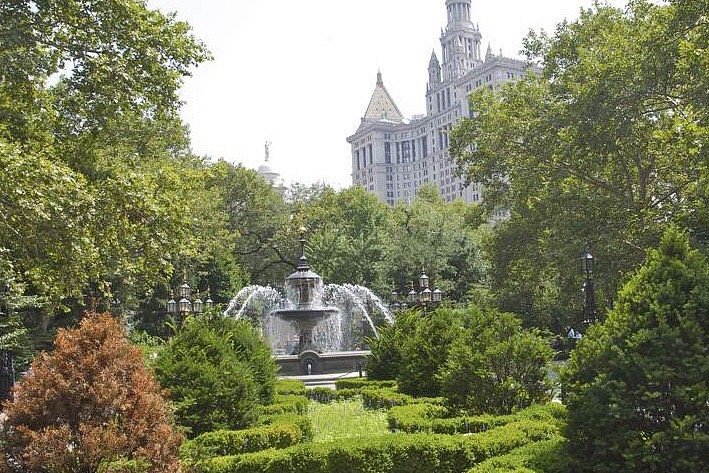
Though small compared to New York’s larger green spaces like Central Park or Prospect Park, City Hall Park holds a disproportionately large place in the city’s political, cultural, and architectural history. It is one of the oldest public spaces in the United States still used for civic purposes, and its evolution mirrors the evolution of New York City itself—from colonial settlement to modern metropolis.
In this extensive blog, we will take a deep dive into the park’s history, explore its architectural and cultural features, trace its role in civic life, and discover why City Hall Park continues to matter—not just as a patch of green, but as a quiet storyteller of New York’s past.
A Brief Overview: What Is City Hall Park?
City Hall Park is a landscaped public park in Lower Manhattan, surrounding the historic New York City Hall building. Located between Broadway, Park Row, and Chambers Street, it serves as a civic nucleus where citizens, government officials, tourists, and office workers converge daily.
At first glance, it may appear to be simply a pleasant green square adorned with fountains, benches, flowerbeds, and historical statues. But beneath its peaceful exterior lies a layered past—one that includes Revolutionary War trials, public markets, political rallies, celebrations, protests, executions, and countless moments that shaped the trajectory of New York City.
To understand City Hall Park is to understand the city’s growth from a colonial outpost to the nation’s most influential urban center.
The Early Days: A Colonial Past Steeped in Complexity
Long before the area became a park, this land served completely different purposes. In the 17th century, when New York was still New Amsterdam under Dutch rule, the space around present-day City Hall Park was used as:
- A communal pasture
- A gathering location for militia drills
- A site for public punishments
- A place for community decision-making
When the British took control in 1664 and renamed the settlement New York, the area started developing into a more formal town common. Known as “The Fields,” the area served as the primary open space where citizens assembled to discuss grievances—often loudly and passionately.
By the mid-1700s, The Fields had become a symbol of resistance. Colonial citizens gathered here to debate British policies, protest unjust taxation, and voice their discontent long before the American Revolution formally began.
One of the most emotionally charged historical moments tied to the location was the execution of Nathan Hale in 1776. Hale, a young American spy captured by the British, is said to have delivered his famous last words—“I only regret that I have but one life to lose for my country”—within steps of the park. His statue now stands proudly inside the park, a tribute to his sacrifice.
This land has witnessed more than beauty and leisure—it has known conflict, sacrifice, and societal churn.
Growing into a Civic Center: The Rise of New York City Hall
As the 18th century gave way to the 19th, New York City grew rapidly—first as a vital trading port and then as the commercial powerhouse of a young nation. Civic leaders recognized the need for an organized municipal center, one that symbolized both the city’s ambitions and its democratic spirit.
Construction for New York City Hall began in 1803 and took nearly a decade, finally completing in 1812. The structure remains one of the oldest continuously used city halls in the country. Lovingly designed in French Renaissance and American Georgian styles, the building stands as a proud reminder of refined early American craftsmanship.
The creation of City Hall effectively transformed the surrounding area from a rough multipurpose field into a planned municipal green space. Over the following decades, pathways were laid, gardens planted, and civic monuments erected. The area gradually evolved into what we now call City Hall Park.
City Hall Park in the 19th Century: A Hub of City Life
The 19th century was arguably the most transformative era for City Hall Park. With the city’s population skyrocketing due to immigration and industrial growth, the park became a natural gathering place for:
Political Debates and Speeches
Politicians addressed crowds directly from platforms in the park. It became a kind of outdoor town hall.
Protests and Demonstrations
Social movements—from labor unions to abolitionists—held rallies here. The park served as a democratic stage long before public demonstration spaces were formally designated.
Public Celebrations
Victory parades, holiday festivals, and patriotic ceremonies regularly filled the open lawns and walkways.
Everyday Recreation
Families picnicked, children played, and workers relaxed after long hours in nearby printing houses, factories, or municipal offices.
Architectural Enhancements
By the mid-1800s, the city invested heavily in beautifying the park. Additions included:
- Fountains
- Cast-iron fences
- Statues honoring historical figures
- Gas lamps
- Decorative gardens
These improvements reflected New York’s growing confidence and ambition as one of the world’s most dynamic cities.
A Park Surrounded by Icons
One of the most fascinating qualities of City Hall Park is how it sits like a jewel embedded among some of the city’s most important architectural landmarks.
1. New York City Hall
The park’s centerpiece—a dignified, marble-clad neo-Palladian masterpiece.
2. The Municipal Building
Just north of the park stands the vast Manhattan Municipal Building, completed in 1914. It remains one of the largest government buildings in the world and a prime example of Beaux-Arts design.
3. Woolworth Building
One of the world’s tallest buildings when completed in 1913. Its Gothic architecture looms dramatically over the park.
4. Park Row
Once called “Newspaper Row,” this street hosted major newspapers such as The New York Times, The World, and The Tribune. Journalists regularly crossed the park as they chased stories and deadlines.
5. Brooklyn Bridge Approach
A short walk from the southeastern corner of the park leads to the Brooklyn Bridge—a fitting reminder of the city’s unstoppable spirit.
These towering neighbors make City Hall Park feel almost like a historical crossroads, where eras of architecture and layers of urban development meet.
Design and Aesthetics: What Makes the Park Beautiful
Though not sprawling, City Hall Park features deliberate design choices that make it feel open and elegant.
Lush Lawns and Mature Trees
The tall elms, maples, and oaks provide shade that cools the stone paths even on hot summer days.
The Jacob Wrey Mould Fountain
Perhaps the park’s most iconic landmark. The fountain’s ornate Victorian design includes:
- Granite basins
- Wrought-iron detailing
- Sculpted ornaments
- Beautiful nighttime lighting
Originally installed in the 1870s, the fountain has been restored multiple times and remains a favorite photography spot.
Curved Walkways
The paths wind in gentle arcs, creating a sense of organic flow rather than rigid formality.
Sculptures and Monuments
Statues honoring:
- Nathan Hale
- Horace Greeley
- Various civic leaders and historic figures
These works of art make the park not just a place of nature but a place of memory.
City Hall Park Today: A Blend of Civic Duty and Daily Life
Walk through City Hall Park on any given weekday, and you’ll see an almost perfect cross-section of New York’s urban life.
Tourists
Exploring the City Hall architecture, snapping photos of the fountain, or passing through on the way to the Brooklyn Bridge.
Local Workers
Taking lunch breaks, reading on benches, or grabbing a coffee from nearby cafés.
Protesters and Advocates
Civic demonstrations still happen regularly on the steps of City Hall, keeping the park’s tradition of public discourse alive.
Commuters
Subway entrances and major bus routes weave around the park, making it a transitional space for thousands each day.
Garden Enthusiasts
The park’s landscaped flowerbeds change seasonally, drawing photographers and nature lovers.
Though peaceful, the park remains an essential artery in the city’s daily rhythm.
Why City Hall Park Matters in Modern Times
In an era of rapid urban development, it is easy to overlook small green spaces. Yet City Hall Park plays an important role in the city’s identity.
1. A Historical Anchor
It is one of the few places in New York where 17th-century colonial history, 19th-century political activism, and modern civic administration exist side by side.
2. A Civic Symbol
City Hall Park remains the literal and symbolic foreground of government—where democracy meets daily life.
3. A Green Sanctuary
For busy office workers, attorneys, journalists, and tourists, the park offers a breath of fresh air.
4. A Space for Public Voice
From the colonial era to today, the park serves as a stage for protests, vigils, and civic expression.
5. A Place of Beauty
Its fountain, gardens, and historic architecture give Lower Manhattan an aesthetic grace often overshadowed by steel and glass.
Visiting City Hall Park: Tips for Travelers
If you’re exploring New York City and want to include City Hall Park in your itinerary, here are some helpful suggestions:
Best Times to Visit
- Morning: Quiet and peaceful
- Spring / Summer: Blooming flowers, vibrant greenery
- Evening: The fountain’s lights create a beautiful atmosphere
Nearby Attractions
You can combine your visit with:
- Brooklyn Bridge (5 minutes away)
- The Oculus & World Trade Center area
- St. Paul’s Chapel
- South Street Seaport
- Tribeca cafés and restaurants
Photography Tips
- Capture early morning golden light on City Hall
- Night shots of the fountain are stunning
- The contrast of greenery against the Woolworth Building creates dramatic visuals
Accessibility
The park includes multiple accessible entrances and nearby transit:
- Subway lines: 2, 3, 4, 5, 6, A, C, J, R
- Numerous bus routes
Final Thoughts: A Small Park with a Big Story
City Hall Park is more than just a green patch in Lower Manhattan. It is:
- A witness to centuries of New York’s history
- A partner to the city’s most iconic civic architecture
- A refuge for everyday New Yorkers
- A continuing stage for democracy and public discourse
- A reminder that even in the world’s busiest city, serenity has a place
Visiting City Hall Park offers a rare opportunity to touch the layers of New York’s past while enjoying the comforts and beauty of its present. It is a space where history breathes, where nature softens the edges of urban life, and where every visitor—tourist or local—can pause and watch the city in all its complexity.